
A dream holiday can quickly become a public health challenge when thousands of people share the same dining rooms, elevators and living spaces. Recent viral outbreaks on cruise ships have shown just how vulnerable these floating cities remain to infectious diseases.
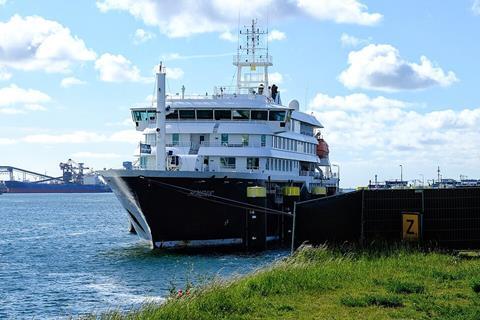
Recent outbreaks linked to cruise travel have once again highlighted how easily viruses can spread in crowded and interconnected settings. During 2025 and 2026, multiple cruise ships reported outbreaks of norovirus - the highly contagious virus commonly associated with gastroenteritis (predominant symptoms are vomiting and diarrhoea).
More recently, an outbreak linked to Andes hantavirus exposure associated with the MV Hondius expedition cruise raised concerns about how emerging infectious diseases may complicate future travel-related outbreak responses.
Although these viruses spread differently, both outbreaks reveal an important public health reality: cruise ships remain uniquely vulnerable to infectious disease transmission.
Why viruses spread so easily on cruise ships
Cruise ships create ideal conditions for virus transmission. Passengers and crew live in close proximity for days or weeks, often sharing dining facilities, bathrooms, recreational spaces and ventilation systems. Infections can spread rapidly through direct contact, contaminated surfaces, airborne droplets or aerosols, and even shared food-handling environments.
Norovirus is particularly difficult to control because only a very small number of viral particles are needed to cause infection. The virus can survive on surfaces for prolonged periods and may persist despite routine cleaning.
Contaminated door handles, elevator buttons, buffet utensils and shared restroom facilities can all contribute to transmission. Vomiting events can also aerosolise viral particles, allowing contamination to spread beyond immediate surfaces.
In enclosed environments such as cruise ships, this creates additional challenges for infection control. The COVID-19 pandemic demonstrated these risks dramatically. Outbreaks across cruise ships such as the Diamond Princess became early examples of how rapidly respiratory viruses can spread in confined travel settings. Quarantine efforts were complicated by shared ventilation systems, asymptomatic transmission and the constant movement of passengers and crew.
The Andes hantavirus outbreak raised different concerns
Unlike norovirus, Andes hantavirus is not commonly associated with cruise ships. The virus is primarily linked to exposure to infected rodents and contaminated environments, particularly in parts of South America. However, the recent outbreak associated with the MV Hondius expedition cruise highlighted how ecotourism and expedition-style travel may introduce additional infectious disease risks into confined travel settings.
While evidence suggested exposure occurred during travel in South America, public health authorities also considered the possibility of limited person-to-person transmission, which has previously been documented for Andes virus.
Public health authorities across multiple countries were required to coordinate contact tracing, monitoring and outbreak response activities. The outbreak served as a reminder that modern travel can rapidly transform local infectious disease events into international public health concerns.
Why traditional outbreak responses may not be enough
Current outbreak management on cruise ships still relies heavily on reactive measures. These include intensified cleaning and disinfection, isolation of symptomatic passengers, hand hygiene campaigns and contact tracing. While these approaches remain essential, repeated outbreaks suggest they may not always be sufficient on their own.
One major reason is that viruses can persist in the environment. Contaminated surfaces, airborne particles and shared indoor spaces may continue to contribute to transmission even after standard cleaning procedures are implemented.
As a result, researchers are increasingly exploring technologies that provide continuous or passive environmental protection rather than relying solely on reactive cleaning after outbreaks begin.
New technologies could help reduce future outbreaks
Several emerging technologies are now being investigated to reduce viral spread in indoor environments, including cruise ships. Some systems focus on air decontamination. High-efficiency particulate air (HEPA) filtration combined with ultraviolet-C (UV-C) irradiation has shown effectiveness in removing or inactivating airborne viral particles. Other technologies, such as photocatalytic oxidation and plasma sterilisation systems, generate reactive molecules capable of damaging viral proteins and genetic material.
Researchers are also investigating newer systems that use low-energy charged particles to destabilise viruses suspended in the air without generating ozone or harmful UV exposure. Some experimental studies have suggested that certain essential oil vapours may reduce viral survival in the air where researchers believe some of these vapours may interfere with viral envelopes, reducing infectivity before transmission occurs - although further research is needed before their effectiveness can be confirmed in real-world settings.
At the same time, attention is growing around antiviral surface technologies. Scientists are developing self-disinfecting coatings containing metals such as copper and silver, antimicrobial polymers and peptide-based antiviral materials that can continuously reduce viral survival on frequently touched surfaces. Although many of these technologies are still being evaluated, they represent a shift toward more proactive approaches to infection prevention.
Testing grounds for future infection-control systems
As global travel continues to expand, outbreaks linked to confined environments will likely continue to occur. Cruise ships offer a unique example of how modern mobility, shared indoor spaces and environmental transmission can combine to amplify infectious diseases.
But they may also become important testing grounds for the next generation of infection-control technologies. Future outbreak preparedness will likely require a combination of traditional public health measures and continuous environmental protection strategies that target both airborne and surface-associated transmission.
In a world where people move rapidly across continents, preventing outbreaks may increasingly depend not only on how we respond to infectious diseases, but also on how we design the spaces in which we live, travel and interact.
Umme Laila Urmi, Ph.D. is a Research Associate with the School of Optometry and Vision Science, Faculty of Medicine and Health at UNSW Sydney
Topics
- airborne
- Andes hantavirus
- Antimicrobials
- antiviral materials
- Asia & Oceania
- biocides
- COVID-19
- cruise ships
- Disease X
- disinfection
- Emerging Threats & Epidemiology
- HEPA filtration
- Infection Prevention & Control
- Infectious Disease
- norovirus
- One Health
- photocatalytic oxidation
- plasma sterilisation
- quarantine
- SARS-CoV-2
- surface contamination
- transmission
- ultraviolet-C
- Viruses






_-_5.jpg)
No comments yet