
All Applied Microbiology International articles
-
 Careers
Horizon Award winners one year on: What are they up to?
The nominations for the Horizon Awards are in - and the judges are making their decisions. While we await the big announcement, we’ve been catching up with the superstars who won in 2025.
-
 Careers
Meet the Global Ambassadors: our Q&A with Sanjib Bhakta
The Microbiologist gets to know our Global Ambassador for the UK, Professor Sanjib Bhakta who is Professor of Molecular Microbiology and Biochemistry at Birkbeck, University of London.
-
 Careers
How a sceptic was won over: Charlotte Wilson on her internship with AMI
Fourth year PhD student Charlotte Wilson admits she was sceptical before she embarked on her PIPS internship with Applied Microbiology International’s Communications and Marketing Team - but here’s how it turned out.
-
 News
NewsPaper reveals huge enthusiasm for Caribbean microbiome hub at inaugural symposium
Turnout at a recent symposium has confirmed the appetite for a new microbiome hub in Puerto Rico, reveals Puerto Rico AMI Global Ambassador Dr. Filipa Godoy-Vitorino.
-
 News
NewsApplied Microbiology International announces new president, Professor Raquel Peixoto
Applied Microbiology International is delighted to announce that Professor Raquel Peixoto will be taking over the reins from Professor Jack Gilbert as President.
-
 News
NewsProfessor Jack Gilbert leaves a lasting legacy of collaboration and global engagement at AMI
As Professor Jack Gilbert steps down as President of Applied Microbiology International, he leaves a legacy of collaboration, generosity and an unwavering commitment to strengthening our global community.
-
 News
NewsAMI welcomes new member to its Board of Trustees
Applied Microbiology International has welcomed Professor Les Baillie as the latest member of its Board of Trustees. We also bid a fond farewell and thank you to Professor Diane Purchase who is leaving the Board.
-
 News
NewsAMI calls for marine microbes to be at the heart of Europe’s future ocean policy
Applied Microbiology International (AMI) has responded to the European Commission’s consultation on the proposed EU Ocean Act, highlighting the essential contribution of marine microorganisms to ocean health, climate regulation, biodiversity and the blue bioeconomy.
-
 News
NewsFrom soil to outer space: our interview with JAM Systems Microbiology Lead Editor Janet Jansson
We get to know Janet Jansson, who has been appointed as new Lead Editor in Systems Microbiology at the Journal of Applied Microbiology.
-
 News
NewsFree webinar: Nuts, bolts and getting down to brass tacks in the expanding universe of microbiome stewardship
In a fascinating free webinar from the Microbes and Social Equity 2026 Speaker Series, Dr Robert Beiko PhD will take a step back to examine a fundamental question at the heart of microbiome stewardship: what exactly are we trying to protect, and why?
-
 Opinion
How Puerto Rico’s first microbiome research center can reshape global science collaboration
AMI’s Global Ambassador for the Americas, Dr. Filipa Godoy-Vitorino, Chair of the Department of Microbiology at the University of Puerto Rico, reveals why she is spearheading the planned Puerto Rico Center for Microbiome Sciences (PR-CMS)—the first of its kind in the region.
-
 News
NewsMember Q&A: Harta Wedari on how AMI has opened up new opportunities and communities
Dr Ni Luh Putu Harta Wedari, a medical doctor and Clinical Microbiology Specialist from Bali, Indonesia reveals how engaging with AMI has expanded her international network and unveiled new opportunities.
-
 News
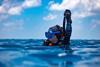
NewsProbiotic and postbiotic treatments revive heat-stressed corals
Researchers have established that both live probiotic and inactivated postbiotic treatments improve coral health—while the animals are under thermal stress during a natural marine heatwave.
-
 Careers
Trusting in science: Vito Latorre reports back on Parliamentary Links Day
University of East Anglia PhD student Vito Latorre shares his experiences of representing Applied Microbiology International at the Parliamentary Links Day in Westminster earlier this summer.
-
 News
NewsAMI to lead workshop at the World One Health Congress this weekend
Applied Microbiology International (AMI) will be taking part in the 9th World One Health Congress, which will be held in Lisbon from 4-7 September, bringing together more than 1.200 participants, featuring almost 600 scientific posters and hosting over 80 sessions.
-
 Opinion
When do human-driven changes to wildlife microbiomes become a One Health concern?
Animals live in close partnership with communities of microbes that support digestion, immune development, and defence against pathogens, but human activities are changing those partnerships, says Katherine M. Lagerstrom.
-
 News
NewsMeet the Global Ambassadors: our Q&A with Luay Abu-Qatouseh
The Microbiologist gets to know our Global Ambassador for Jordan, Associate Prof. Dr. Luay Abu-Qatouseh of the Faculty of Pharmacy and Medical Sciences, University of Petra.
-
 News
NewsInfluenza A infection under-reported during 2021 UK pandemic, researchers reveal
Influenza A infections were under-reported during the 2021 UK pandemic, according to research presented earlier this year at MLSFF 2026.
-
 News
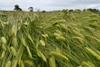
NewsBarley discovery reveals nitrogen cycling pathway that could offer a nature-based solution to fertilizer loss
A new study reveals the presence of a nitrogen cycling pathway in barley that could prove valuable in cutting fertilizer requirements as the cost to farmers rises.
-
 Careers
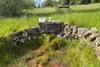
A day in the life: Discovering the hidden microbes of Britain’s historic waters
PhD student Wewerly Fernandes outlines her investigations into the microorganisms living in Britain’s historic wells and natural springs - once believed to hold healing properties and linked to legends of Merlin and renowned figures like Robert Burns.