
With the commercialization of mRNA vaccines against COVID-19, research and development into the application of mRNA in vaccines and pharmaceuticals is accelerating. In particular, it is attracting attention not only in the field of vaccines for preventing infectious diseases but also in the field of cancer immunotherapy.
Regarding infectious diseases, vaccine development is underway for pathogens other than the novel coronavirus; for example, a respiratory syncytial virus (RSV) vaccine has been approved in Japan and overseas, and vaccines for various other infectious diseases are advancing to clinical trials.
In cancer immunotherapy, cancer vaccines—which involve administering mRNA encoding proteins specific to cancer cells to elicit an immune response that recognizes those proteins and attacks the cancer cells—are attracting attention. In addition, cytokine therapy, which involves the direct administration of mRNA encoding molecules called cytokines that activate the immune system against cancer, is also showing promise.
Lipid nanoparticles accumulate in the liver
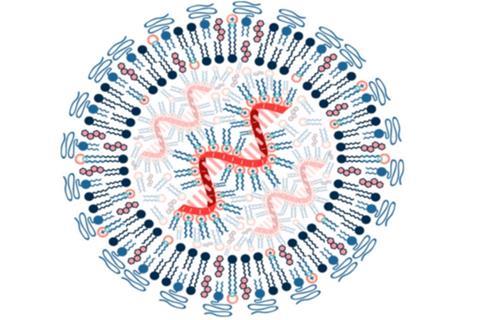
Clinical trials for both cancer vaccines and cytokine therapy are being actively conducted worldwide. In these applications, mRNA is delivered encapsulated within lipid nanoparticles.
Lipid nanoparticles stabilize the mRNA within the body, protect it from degradative enzymes, and, once inside the target cells, accelerate the process leading to protein production. Furthermore, by inducing an inflammatory response, they enhance the efficacy of vaccines and immunotherapies. They also migrate easily to lymphoid tissues such as the spleen and lymph nodes, a characteristic that is crucial for achieving high efficacy with vaccines.
However, it is known that lipid nanoparticles accumulate most heavily in the liver among all organs. For example, when administered intravenously, they migrate to the liver via the bloodstream. Furthermore, when administered intramuscularly as a vaccine or directly into a tumor during cytokine therapy, they leak into the bloodstream and accumulate in the liver.
This causes two main problems. First, unintended protein production from the mRNA in the liver can lead to side effects. Second, when targeting organs critical for vaccination—such as the spleen—the amount of mRNA reaching the target organ is reduced by the amount that accumulates in the liver.
Biocompatible polymer coatings
In this study, published in researchers developed a method to inhibit the migration of these lipid nanoparticles into the liver. Since the walls of the hepatic sinusoids—the liver’s capillary network—serve as the entry point for lipid nanoparticles into the liver, they conceived the idea of coating these sinusoidal walls with polyethylene glycol (PEG), a biocompatible polymer.
MICROBIOLOGY NEWS: Register with The Microbiologist for more free articles
They used a proprietary coating agent consisting of positively charged peptides linked to two PEG chains. Since this coating agent adsorbs to the sinusoidal walls for only a few hours before being excreted, there is no concern that liver function will be impaired for an extended period.
Furthermore, because it selectively coats the sinusoidal walls, it does not interfere with the delivery of lipid nanoparticles to other organs. In addition, this coating agent is already in clinical trials for the purpose of delivering oligonucleotide therapeutics to cancer sites, and its safety has been demonstrated.
Mouse studies
First, the researchers administered lipid nanoparticles intravenously to mice and observed the livers of live mice using a specialized microscope. When the coating agent was not administered, the lipid nanoparticles accumulated in the liver; however, researchers confirmed that pre-administration of the coating agent suppressed this accumulation in the liver.
Next, when researchers evaluated the efficiency of protein expression from mRNA, they found that using the coating agent reduced protein expression in the liver by several dozen times.
Conversely, protein expression in the spleen increased several-fold. This is thought to be because the lipid nanoparticles that were not captured by the liver accumulated in the spleen. These results demonstrate that the coating agent suppresses protein expression in the liver—which is undesirable for vaccines and immunotherapies—while enhancing protein expression in the spleen, which is crucial for vaccines.
Coronavirus model
The researchers examined a vaccine targeting the spike protein of the novel coronavirus as a model. This vaccine is administered intramuscularly; however, if it accumulates in the liver, the spike protein is produced within the liver. This can lead to the liver being attacked by immune cells, potentially causing hepatitis.
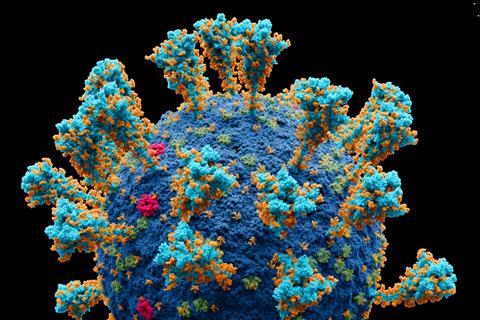
Conversely, it has also been suggested that the expression of the spike protein in the liver may induce immune tolerance, thereby weakening the vaccine’s efficacy. Through this experiment, the researchers demonstrated that the coating agent can suppress protein expression from mRNA in the liver following intramuscular administration.
Furthermore, regarding vaccine efficacy, they showed that the ability to induce antibody production against the spike protein was equivalent regardless of the presence or absence of the coating agent, and that the coating agent enhanced the induction of cellular immunity against the spike protein.
Cancer vaccines
In clinical trials of cancer therapy vaccines, intravenous administration of lipid nanoparticles targeting the spleen is often performed. In mouse experiments, administering the coating agent prior to the vaccine resulted in an enhanced induction of cellular immunity, which is essential for cancer vaccines. This is believed to be due to improved protein expression efficiency in the spleen.
In treatments involving the direct administration of cytokine mRNA against cancer, a safety concern arises because lipid nanoparticles migrate to the liver, where cytokines are produced and distributed systemically. Regarding this issue, this study demonstrated that the use of a coating agent can suppress cytokine production in the liver and systemic distribution of cytokines without compromising the efficacy of cancer therapy.
Topics
- Asia & Oceania
- cancer vaccines
- Clinical & Diagnostics
- coronavirus
- COVID-19
- cytokine therapy
- Disease Pathology
- Disease Treatment & Prevention
- Immunology
- Industrial Microbiology
- Industry News
- Infection Prevention & Control
- Infectious Disease
- liver
- Medical Microbiology
- mouse model
- mRNA vaccines
- One Health
- Pharmaceutical Microbiology
- RSV vaccine
- SARS-CoV-2
- Vaccinology
- Virology
- Viruses







No comments yet